Quick answer: A UGC creator makes authentic-feeling video content that brands license for their own ads and social pages. You don't need followers, a studio, or fancy gear: a phone, a $20 ring light, and 3-5 sample videos of products you already own is enough to start pitching. Beginners typically land $50-$200 per video, experienced creators with usage rights and conversion data charge $500-$1,500+. Most people who pitch consistently land a first paid gig in 4-8 weeks.
UGC pays because it doesn't look like an ad. It looks like your friend holding up a serum in her bathroom mirror, or a guy in his kitchen ranting about a knife set. Brands buy that footage, drop their logo and a CTA on it, and run it as a paid Instagram or TikTok ad, because it converts better than anything shot on a $10,000 rig with a model who's never used the product.
Here's the part nobody tells beginners: getting good at UGC is 20% filming and 80% everything around it, pitching, revisions, hitting a brand's brief, and turning around variations fast when the first cut doesn't perform. That second part is where things get interesting in 2026, and it's what this guide actually covers.
What Is UGC, Really? (And What It Isn't)
UGC stands for user-generated content, but in the creator-economy sense it's become shorthand for a specific job: you film short, authentic-looking product videos, hand over the raw files and usage rights, and the brand runs them as ads. You're not posting to your own following. You're not an influencer. Your face might never appear on the brand's actual account, it appears in their ad manager, targeting cold audiences who've never heard of the product.
That distinction matters because it changes what brands are actually buying. They're not buying your audience (you might have zero followers and still land six-figure UGC income). They're buying your ability to make something feel unscripted enough to survive the scroll. Hook in the first two seconds, a real reason to keep watching, a clear enough shot of the product that it still works as an ad once they cut it down to 15 seconds.
How Much Do UGC Creators Actually Make in 2026?
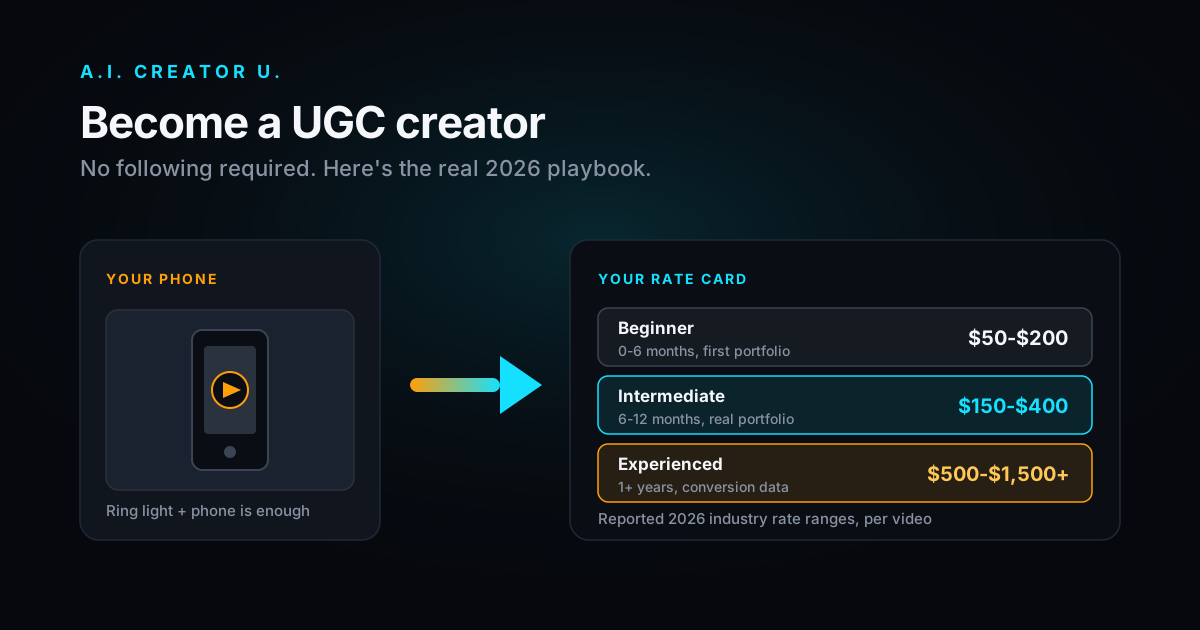
Rates are reported to have settled into three rough tiers this year, and they track experience and usage rights more than follower count:
| Tier | Experience | Typical rate per video |
|---|---|---|
| Beginner | 0-6 months, no track record | $50-$200 |
| Intermediate | 6-12 months, a real portfolio | $150-$400 |
| Experienced | 1+ years, conversion data to show | $500-$1,500+ |
A few things reportedly move the number up: extended usage rights (the brand wants to run your face in ads for a year, not a month), whiteboard/talking-head scripts versus just holding a product, and bundle or retainer deals, brands that lock in 4-12 videos a month are said to negotiate 15-30% below per-video rates in exchange for the volume commitment. Tech, beauty, and wellness brands tend to have the biggest budgets; local services and low-margin categories pay the least.
Treat all of the above as industry-reported ranges, not a guarantee, actual rates vary by niche, region, and how good your reel is. The only number that matters long-term is your own close rate on pitches.
What Do You Actually Need to Start?
Less than you think. The floor is basically:
- A phone with a decent camera (anything from the last four years is fine)
- A clip-on ring light or small LED panel ($15-30)
- A phone tripod or mount ($10-20)
- A lavalier mic if you're talking to camera ($15-25)
That's it. No editing suite, no lighting kit, no studio. What separates people who land paying gigs from people who don't isn't the gear, it's the portfolio and the pitch.
How Do You Build a Portfolio With Zero Paid Clients?
Film 3-5 videos using products you already own. They don't need to be sponsored, brands are evaluating your on-camera presence and storytelling, not whether the product is real. Pick one or two niches you can actually speak to with some authority (skincare, tech gadgets, kitchen stuff, pet products) rather than trying to be generic. A focused portfolio reads as "hire-able specialist," a scattershot one reads as "hasn't found their lane yet."
Host it somewhere simple: a link-in-bio page, a one-page site, or even a well-organized Google Drive folder with a short bio and your rate card up front. Then go pitch. Cold DMs to small-to-mid brands, UGC marketplaces, and straight-up replying to brands' own ads with "I'd love to make content like this for you" all work. Most people who pitch consistently see their first paid gig inside 4-8 weeks.
Here's a pitch template that actually gets replies, adapt the bracketed parts and drop it in a DM or email:
Hey [name], I've been using [specific product] for [timeframe] and love it, especially [specific detail, not generic praise]. I make UGC-style video content for brands in the [niche] space, here's a quick sample: [portfolio link]. Would love to put together a video or two for [product name] if you're open to it, happy to work within your budget for a first project. Let me know!
Short, specific, and it proves you actually know the product instead of mass-pitching every brand in a niche. Specificity is what gets a reply.
Where AI Tools Actually Fit Into a UGC Creator's Workflow
Here's where we're going to be straight with you instead of pretending AI replaces the on-camera part of UGC, because it doesn't, and any brand that's paid for UGC before can smell a fully synthetic "testimonial" from a mile away. What AI genuinely helps with is everything around the raw footage:
Turning one filmed clip into more deliverables. Say you film a single 30-second talking-to-camera clip holding a product. In Studio Zero you can turn that same product into a clean hero shot, a lifestyle scene, and a couple of extra angles from one or two source photos, so your one filming session becomes a full content package (talking-head + hero shot + lifestyle b-roll) instead of just one clip. That's the difference between a $150 delivery and a $400 one for the same shoot.
Filling gaps in a shoot without re-filming. Missed a product angle, need a quick establishing shot of the item on a table, want b-roll that doesn't require you to re-set your ring light? Create Video (we run Seedance 2, Kling 3.0, VEO, Grok, and Sora 2 depending on the shot) can generate that supporting footage from a photo, so you're not re-shooting for one missing cutaway.
Turning your winning script into other languages. If a brand wants the same video adapted for a Spanish- or French-speaking audience and you don't speak the language, Seed Audio's voice cloning can carry your own voice into another language for the voiceover pass, instead of losing the deal or hiring a second creator. If you're weighing voice-cloning tools generally, our ElevenLabs vs Seed Audio comparison breaks down where each one actually wins.
None of this replaces the actual filming, the authenticity is the entire product you're selling. It just means the 3-4 hours you used to spend re-shooting variations, cutting extra angles, or scrambling to hit a last-minute brief can go into pitching more brands instead.
A Realistic 90-Day Plan
- Week 1-2: Film 5 sample videos in your chosen niche using products you own. Build a one-page portfolio with your bio, samples, and starting rate ($50-$100/video is a reasonable opening number).
- Week 3-4: Pitch 10-15 brands a week, DMs, UGC platforms, and comment-then-DM on brands' own ads. Expect mostly silence, that's normal.
- Week 5-8: Land your first 1-3 paid gigs. Over-deliver: extra cutdowns, a couple of angle variations, quick turnaround. This is what turns a one-off gig into a retainer.
- Week 9-12: Raise your rate on new pitches by 25-50% now that you have real client work to show. Start offering content bundles (3-5 videos per shoot) instead of one-offs, that's where the per-video economics get better for you.
The creators who plateau are almost always the ones who stop pitching once they land one client. Keep the top of the funnel full even when you're busy.
Common Mistakes New UGC Creators Make
Pricing too low and staying there. $50 a video is a fine opening rate to build a portfolio, but if you're still charging $50 six months in with 20 delivered videos, that's not humility, that's leaving money on the table. Raise your rate every 5-10 gigs.
Sending generic pitches. "Hi, I'd love to create UGC for your brand!" gets ignored. Reference the brand's actual product, mention a specific angle you'd take, and attach your portfolio link directly in the message, not behind three clicks.
Not reading the brief. Brands that hire UGC creators regularly have exact specs: aspect ratio, length, whether they want a hook line at the start, whether they need a talking-head or just b-roll of the product in use. Missing the brief is the fastest way to not get invited back.
Treating it as one-and-done instead of a relationship. The real money in UGC is repeat brand relationships and retainers, not one-off gigs. A brand that liked your fi