Best UGC Tools for Creators in 2026 (Tested and Compared)
Quick answer: The best AI UGC tools in 2026 split into two camps. If you want realistic synthetic actors reading a script (no real person on camera), look at Arcads, Creatify, and HeyGen. If you're a real creator turning your own face and voice into ad-ready UGC faster, an in-house studio like A.I. Creator U's UGC Creator gets you there without a $77 to $500 a month avatar subscription. Most sellers end up using a mix: one tool for volume-testing synthetic actors, one for the handful of "hero" ads that actually need a real, trusted face.
UGC ads outperform polished brand video because they look like something a friend sent you, not something a studio built. That's also exactly why "UGC" got expensive to fake at scale, brands were paying $50 to $500 per video to real creators just to get that unpolished look on purpose. Then AI UGC tools showed up and collapsed that cost to a few dollars a clip. The problem now isn't cost. It's picking the right tool out of a dozen that all claim to be "the best."
I tested and researched the field the way a seller actually shops for one: what does it cost per month, what do you actually get, and where does each one fall apart. Here's the honest breakdown.
What actually counts as a "UGC tool"?
Two very different products get lumped under "UGC tools," and mixing them up is where most buyers waste money.
Synthetic-actor generators. You write or generate a script, pick an AI avatar from a library, and the tool renders a talking-head video that looks like a real person holding your product and talking about it. Nobody is actually on camera. Arcads, Creatify, MakeUGC, and HeyGen all live here.
Creator-assisted tools. You (or a hired creator) are the actual person on camera, and the AI handles everything downstream: script, hook variations, captions, voice cleanup, multi-platform cuts. This is closer to what how to become a UGC creator covers from the creator's side, and it's the category our own UGC Creator tool sits in.
Neither one is objectively "better." Synthetic actors win on raw volume, test twenty hooks by lunch. Creator-assisted wins on trust, a real face reading your product genuinely still converts better in categories like skincare, supplements, and anything with an authenticity bar. The mistake is picking a synthetic-actor tool for a niche where audiences are primed to sniff out AI faces, or hiring a human creator for a volume A/B test that doesn't need one.
The tools, compared honestly
| Tool | Category | Reported starting price | Best for | Where it falls short |
|---|---|---|---|---|
| Arcads | Synthetic actor | ~$77 to $110/mo (reports vary) | Realism, 1,000+ actor library, emotion controls | UGC-only, no ad-account connection, exports elsewhere |
| Creatify | Synthetic actor | ~$39/mo | Paste-a-product-URL workflow, e-commerce speed | Actor realism lags Arcads on close-ups |
| HeyGen | Synthetic actor / avatar | ~$33 to $99/mo | 700+ avatars, 175+ languages, localization | Built for broader avatar video, not UGC-specific hooks |
| MakeUGC | Synthetic actor (budget) | ~$29/mo | Cheapest entry, "product in hand" shots | Smaller avatar library (150+) |
| A.I. Creator U (UGC Creator) | Creator-assisted / spokesperson | Credit-based (15 free on signup) | Real-face authenticity, bundled with full video/ads pipeline | Not a synthetic-actor library, you supply the face |
A word on those prices: they're reported figures pulled from each vendor's current marketing pages, not hands-on invoices, so treat them as directional and check the vendor's own pricing page before you commit a card. Every one of these platforms moves tiers around every few months.
Why most "best of" lists get this wrong
Almost every roundup ranks these tools purely on avatar count and video realism, because that's the easiest thing to screenshot. It ignores the two things that actually determine whether a tool earns its subscription: does it plug into the rest of your ad workflow, and does the output survive contact with a real ad account.
A synthetic-actor tool that makes gorgeous 4K video is still a dead end if you have to manually download every clip, add captions in a second app, then upload to Meta or TikTok by hand. That's three extra tools and an afternoon, for content that's supposed to be fast and disposable by design. The tools worth paying for either connect to your ad accounts directly or sit inside a pipeline that already handles the video-to-ad, captioning, and multi-platform export step for you.
How to actually pick one (a 4-step framework)
1. Decide if your product needs a real face. Beauty, supplements, anything health-adjacent, and "before/after" categories convert better with a trusted, consistent face, either yours or a hired creator's. Impulse-buy gadgets and novelty products tolerate synthetic actors fine, audiences aren't scrutinizing who's holding a $12 phone gadget.
2. Budget for testing volume, not just the "best" video. If you're planning to run 15 to 30 hook variations to find a winner (which you should, see our TikTok ad maker guide for why volume beats polish early on), price per video matters more than max resolution. A $29/mo plan that outputs cheap, fast variants beats a $220/mo plan you can only afford to use ten times a month.
3. Check where the output has to go next. If your final destination is TikTok Ads Manager or Meta, favor a tool (or a combined workflow) that exports vertical, captioned, platform-ready files without a manual editing pass. Our AI Instagram ad generator guide walks through what "platform-ready" actually means for Reels specifically.
4. Run one real test before committing to a plan. Every tool on this list has a free trial or a low tier. Generate three actual ad variants for your actual product before you buy a Studio-tier subscription. The demo reel on a vendor's homepage is never your product's worst-case scenario, your product is.
Where A.I. Creator U fits
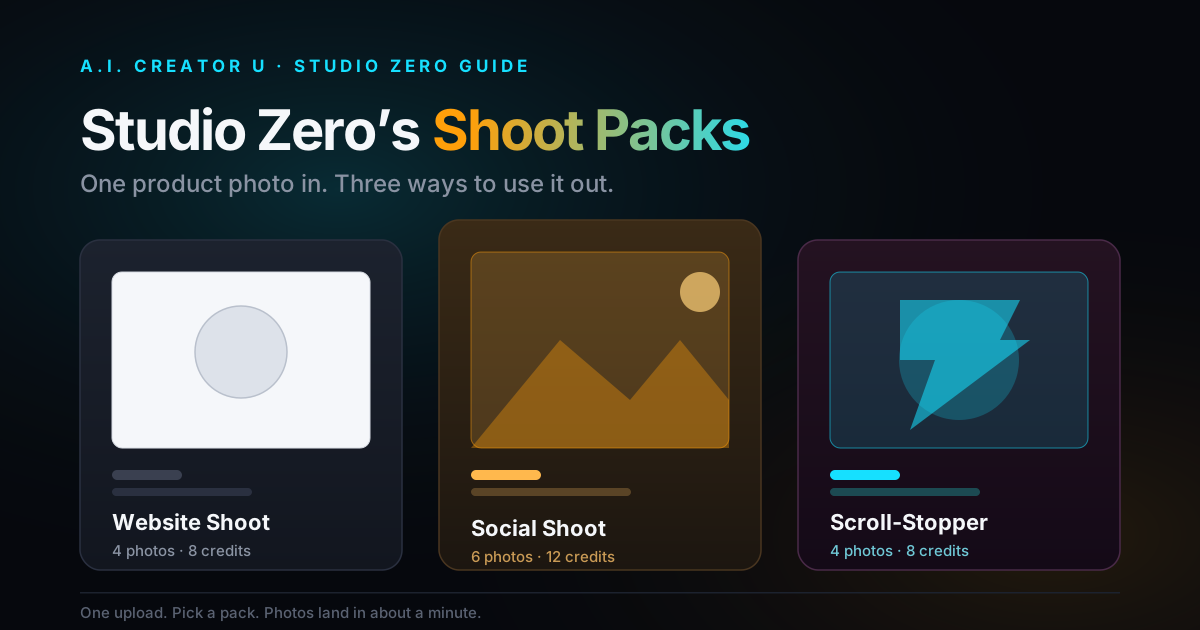
We're not trying to out-avatar Arcads or HeyGen; that's not the product. What UGC Creator does is take a real creator (you, or someone on your team) and turn a normal phone recording into an ad-ready spokesperson video, faster than editing it by hand, with the script, hook structure, and captions handled. If you'd rather generate the "actor" too instead of using your own face, that's what Character Studio (AI twin/character generation) and Studio Zero are for on the product-shot and full-ad side. Both plug into the same credit system as the rest of Create Video, so you're not juggling three separate subscriptions to get from idea to published ad. New accounts start with 15 free credits, enough to actually test the workflow before you decide it's worth a paid plan.
If you already read our AI spokesperson video generator guide, this is the natural next step: pick your actor (real or synthetic), then use that framework to structure the actual script and hook.
A realistic testing budget
Here's roughly what it costs to run a real test batch across the categories above, based on the reported per-plan pricing:
- Synthetic-actor volume test (20 variants): one month of a $29 to $77/mo plan, plus your own time captioning and uploading unless the plan bundles it.
- Creator-assisted spokesperson batch (5 to 10 hero ads): a handful of credits inside a bundled tool like UGC Creator, no separate avatar subscription needed since you're supplying the face.
- Hybrid approach (most sellers, eventually): a budget synthetic-actor plan for constant hook-testing, plus one creator-assisted or hired-human batch per month for the ads that actually need to feel trustworthy.
None of this needs to cost $500 a month to start. The mistake is jumping straight to the $220/mo "Studio" tier before you've confirmed which category, synthetic or real-face, actually wins for your specific product.
Five mistakes that quietly kill UGC ad performance
I've watched sellers burn a full month's ad budget testing the wrong variable because they never questioned the tool itself. These are the mistakes that show up again and again.
Treating every hook as equal. A synthetic actor delivering a flat script reads as an ad, even if the visuals are flawless. The hook, the first line, the specific problem named in the first two seconds, matters more than which avatar library you subscribed to. Spend more time writing 20 hook variations than picking the "best looking" actor.
Ignoring platform-native pacing. A video built for a 30-second Instagram Reel doesn't automatically work as a 15-second TikTok Spark Ad. Captions run long, the payoff lands too late, and the whole thing feels imported instead of native. Re-cut for the platform, don't just re-upload.
Buying the top tier before running one real test. Every tool above has a cheap or free tier for a reason: they know most buyers churn within a month once the novelty wears off. Run three real ads for your actual product on the entry tier before you ever look at the "unlimited" plan.
Skipping disclosure when it matters. If you're running paid partnerships or the ad implies a real customer testimonial that didn't happen, check your platform's ad policy and applicable disclosure rules before publishing. This isn't about avoiding AI, it's about not accidentally making a claim you can't back up.
Never rotating the winning ad out. Ad fatigue hits UGC-style creative faster than polished brand video, because the whole appeal is that it feels fresh and unscripted. A winning ad from six weeks ago is probably costing you more per click today than it was on day one. Budget for a steady drip of new variants, not a single "winner" you run into the ground.
What "good" actually looks like in the output
It's worth being blunt about what separates a UGC ad that converts from one that just looks like UGC. The winning pattern across every category we've researched is the same: a specific problem stated in plain language in the first line, a demonstration (not a description) of the product doing the thing, and a plain, slightly imperfect delivery, no studio lighting, no perfectly memorized script cadence. Tools that let you dial in "imperfection," a slight pause, a genuine-sounding aside, an unscripted-feeling reaction, tend to outperform tools optimized purely for photorealistic rendering. Realism of the face matters less than realism of the delivery.
That's also the argument for creator-assisted tools in categories where trust is the whole sale: a real person's actual cadence is nearly impossible to synthesize convincingly, and audiences in health, beauty, and financial products are unusually good at spotting the difference.
FAQ
Are AI UGC tools actually allowed on TikTok and Meta ads? Yes, as long as you follow each platform's standard ad policies (no deceptive claims, proper disclosures where required). Neither platform bans AI-generated video outright; they moderate content the same way they'd moderate a human-shot ad, on claims and compliance, not on how it was produced.
Do synthetic AI actors convert as well as real creators? It depends heavily on category. For impulse and novelty products, testing across the tools above shows synthetic actors performing close to real creators. For trust-heavy categories (health, beauty, high-ticket), a real face still tends to edge out a synthetic one, at least until viewers stop being able to tell the difference reliably.
What's the cheapest way to start testing UGC ads? Start with a budget-tier synthetic-actor plan (MakeUGC and Shhots AI both report entry pricing under $30/mo) for volume, or use a credit-based tool like UGC Creator if you already have a real presenter and just need the production pipeline. Either way, resist the urge to buy an annual plan before your first test batch tells you which category wins.
Can I use the same tool for TikTok, Instagram, and YouTube Shorts? Most modern UGC tools export in the standard 9:16 vertical format that works across all three, but caption placement and safe zones differ slightly per platform. Check the export presets before assuming one file works everywhere unmodified.
How many ad variants should I actually test before picking a winner? Fifteen to thirty is the range that shows up repeatedly across the ad-testing guides we referenced for this piece. Below that, you don't have enough signal to tell a real winner from noise; above fifty, you're usually paying for volume you can't analyze fast enough to act on.
Ready to turn your own face (or your product) into your next ad? Start with UGC Creator and use your 15 free credits to run your first test batch today.