Quick answer: AI voice cloning works by splitting a voice into two things a model can learn separately: the identity (pitch, timbre, rhythm) and the words. One system builds a "voiceprint" from a sample of your speech, another generates new audio in that voice from any text you type. Modern tools need as little as 30 seconds of clean audio to produce a usable clone. It's legal to clone your own voice or a voice you have documented consent for; it becomes a legal and ethical problem the moment you use a cloned voice to impersonate, defraud, or mislead someone without permission. States like Tennessee (the ELVIS Act) and California now carry real penalties for the misuse case.
If you've ever typed a script into a text box and heard it come back in a voice that sounds unmistakably like a real person, you've seen the trick. It's not magic and it's not "AI reading a database of your voice out loud." It's pattern extraction: a model listens to how you say things, not just what you say, and learns to carry that signature into brand-new sentences you never spoke.
This guide covers both halves of that sentence. The "how it works" part, so you're not just taking it on faith. And the "responsible use" part, because this is one of the few AI capabilities where getting it wrong doesn't just look bad, it can get you sued or worse. If you want the fastest, plainest version of what voice cloning is, our beginner explainer covers that in five minutes. This piece goes one layer deeper.
How does AI voice cloning actually work?
Every voice clone starts with the same two-part split.
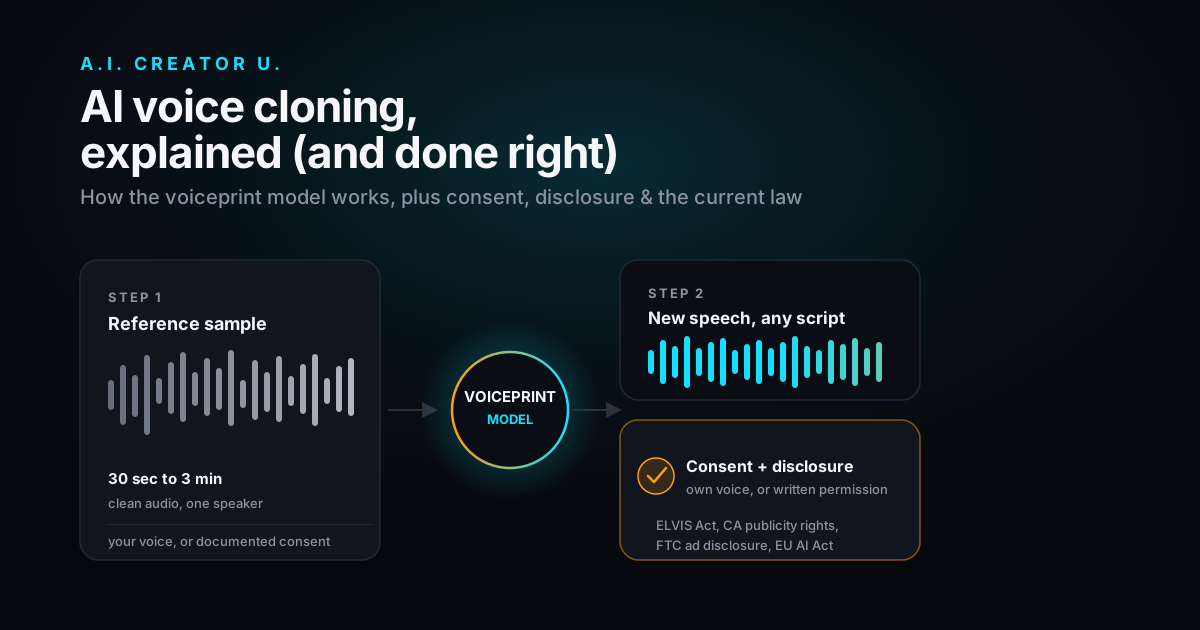
Part one: extracting the voiceprint. A neural network listens to your reference audio and builds a compact mathematical profile of what makes your voice yours: pitch range, cadence, breathiness, the way you land emphasis on certain syllables. This isn't a recording of you saying every possible word. It's more like a fingerprint of your vocal style that the model can apply to sentences you've never said.
Part two: generating new speech. A second system, essentially a text-to-speech engine, takes that voiceprint plus a script and synthesizes new audio. The output isn't stitched from clips of your real voice. It's generated from scratch, frame by frame, shaped to match the profile from part one.
Where tools genuinely differ is how much reference audio they need and what they do with it:
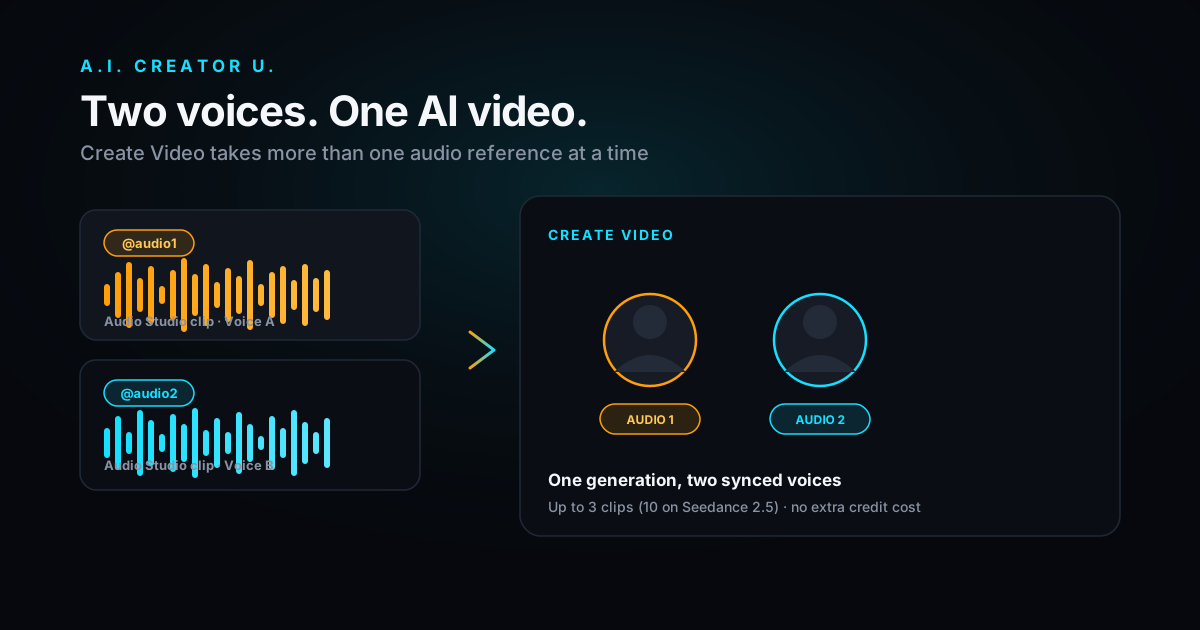
- Zero-shot / reference cloning. You drop in a short clip (sometimes as little as 3 to 10 seconds) and the model conditions its output on that clip for a single generation. There's no persistent "voice" saved anywhere; it's a one-time reference. Seed Audio, the model behind our Audio Studio, works this way: you attach up to three reference clips (each under 30 seconds) and point at them in your prompt with
@Audio1,@Audio2, and so on. - Custom voice cloning. You upload a larger set of samples (usually 30 seconds to a few minutes) and the platform trains or fits a dedicated, reusable voice profile you can call up by name going forward. ElevenLabs' Instant Voice Clone is the best-known version of this, and it's what powers voice cloning inside our own Audio Studio.
Neither approach requires studio equipment. Both are sensitive to clean audio: background noise, echo, and multiple speakers on one track all degrade the clone. A phone recording in a quiet room beats a "professional" file with hiss and room reverb.
Zero-shot vs. custom cloning: which one do you actually need?
| Zero-shot reference cloning | Custom voice cloning | |
|---|---|---|
| Sample needed | One clip, under 30 seconds | 30 seconds to 3 minutes total |
| Setup time | None, attach and generate | A few minutes to process |
| Reusable voice profile | No, one-off per generation | Yes, saved to your library |
| Best for | A single narration, one video, testing a tone | Recurring content in the same voice: a channel, a character, a brand |
| Example in our stack | Seed Audio reference clips (@Audio1) | ElevenLabs-based cloning in Audio Studio (1 credit) |
If you're narrating one video and never plan to reuse that voice, reference cloning is faster and cheaper. If you're building a recurring AI presenter, a narrator for a whole channel, or cloning your own voice once so you never have to re-record intros, a saved custom voice pays for itself after the second use.
Is AI voice cloning legal?
Cloning your own voice, or a voice you have clear, documented consent to use, is legal everywhere we're aware of. Where it gets risky is unauthorized use: cloning someone else's voice without permission, especially to impersonate them, deceive an audience, or defraud someone.
The legal landscape tightened through 2025 and 2026, not loosened:
- Tennessee's ELVIS Act (2024) made unauthorized voice cloning a specific civil and criminal offense with statutory damages, the first state law written specifically for AI voice replication.
- California's biometric and publicity-rights law treats a person's voice as protected, giving individuals grounds to sue over unauthorized synthetic use of their likeness.
- The FTC has been explicit that using a cloned voice in advertising without disclosure can qualify as a deceptive practice, the same framework it uses for fake reviews and hidden endorsements.
- The EU AI Act, phasing in through 2026, requires disclosure whenever a person is interacting with synthetic media, voice included.
None of this is exotic case law. The clearest enforcement example so far is the 2024 AI-generated "Biden" robocall that told New Hampshire voters to skip a primary. The telecom that transmitted it settled with the FCC for a million dollars. That's the ceiling of what "no consent, deceptive intent" gets you.
The rule of thumb that covers basically every legitimate use case: clone your own voice, or get explicit written permission from the person whose voice you're cloning, and disclose synthetic audio when it's used commercially or could plausibly deceive someone. That's it. Everything else is edge cases lawyers argue about.
What does "responsible use" actually mean in practice?
Skip the vague ethics talk. Here's the concrete version:
- Get consent before you clone anyone but yourself. Not implied consent, not "they probably wouldn't mind." Documented, specific consent that says how the clone can be used.
- Don't use a clone to impersonate someone in a context where the audience would reasonably believe it's really them speaking, unless that's explicitly disclosed (a "voiced by AI" credit, a watermark, a stated disclaimer).
- Never clone a voice to extract money, credentials, or sensitive information from someone. This is the fraud case, and it's the one prosecutors actually pursue.
- Disclose synthetic voice in ads and commercial content. The FTC and EU AI Act both point the same direction here: label it.
- Keep your own reference samples if you're cloning your own voice for business use, so you have a clean record of consent and origin if anyone ever asks.
Most creators reading this only need rule one and rule four. You're cloning your own voice to save re-recording time, or a voice actor's with their sign-off, and using it in your own content. That's the overwhelming majority of legitimate use, and it's fully in the clear.
How to clone a voice responsibly, step by step
Here's the actual workflow inside Audio Studio, using our real limits and pricing rather than a generic checklist.
- Record clean reference audio. 30 seconds minimum, 3 minutes maximum works best, in a quiet room, one speaker, no music underneath. Read naturally, not in a monotone.
- Get and keep consent if it isn't your own voice. A simple written note ("I, [name], consent to my voice being cloned and used for [purpose]") is enough for almost every legitimate use case, and you'll want it on file.
- Upload the samples in Audio Studio. Our cloning flow runs on ElevenLabs' Instant Voice Clone under the hood, costs a flat 1 credit, and checks your total sample length automatically. Under 30 seconds gets rejected before it spends a credit; over 3 minutes and you'll want to trim.
- Name and label the voice. Give it a name you'll recognize later, plus an optional description if you're building a library of multiple cloned voices for different projects.
- Generate your first script. Type the text, pick the new voice from your library, and render. If a clone comes out sounding off, it's almost always the input sample, not the model: re-record with less background noise and try again.
- For a one-off narration instead of a saved voice, skip cloning entirely and use Seed Audio's reference clips directly in your prompt with
@Audio1. Faster for a single video, no permanent voice profile created. - Label commercial output. If the clone is going into an ad, a product video, or anything published under a brand name, add a simple disclosure that the voice is AI-generated or AI-assisted.
That's the whole loop: clean sample in, consent on file, credit spent once, disclosed voice out.
The part most guides skip
Most "AI voice cloning" content either stops at "here's how cool this is" or panics into "this is going to destroy trust in audio forever." Neither is useful. The honest version: voice cloning is now good enough that the technical bar for misuse is basically zero, which means the actual bar that matters is legal and social, not technical. The ELVIS Act and the FCC's million-dollar settlement exist because the technology got easy before the guardrails were obvious. If you're cloning your own voice or a voice you have permission for, none of that risk touches you. If you're tempted to clone someone else's voice "just to see," that's exactly the impulse the new laws are aimed at.
Where this fits with the rest of AI audio
Voice cloning is one tool inside a bigger toolkit. If you're deciding which cloning approach fits your actual project, our head-to-head comparison of ElevenLabs and Seed Audio breaks down quality, pricing, and language support between the two engines we support. And if you're trying to figure out how voice cloning fits into a full production pipeline, from scriptwriting to sound design, the AI Audio Generation complete guide is the pillar page for this whole category.
Ready to try it yourself? Audio Studio has both cloning paths built in: a flat-credit custom voice clone for anything you'll reuse, and Seed Audio's reference-clip mode for a fast one-off. New accounts get up to 16 free credits (a signup grant plus an onboarding bonus), enough to test a clone before you commit to a workflow.
FAQ
Do I need professional recording equipment to clone my voice? No. A phone recording in a quiet room with no background noise or music works fine for both zero-shot and custom cloning. What kills quality isn't the microphone, it's noise, echo, and multiple people talking over each other in the sample.
How much audio do I actually need? For a reusable custom clone, aim for 30 seconds minimum and up to 3 minutes of clean, natural speech. For a one-off reference clone (like Seed Audio's @Audio mode), a single clip under 30 seconds is enough.
Is it legal to clone my own voice for my own content? Yes, without qualification. The legal risk in every jurisdiction we've seen only appears when you clone someone else's voice without their consent, or use a clone to impersonate or deceive.
Do I have to disclose that a voice is AI-cloned? For commercial and advertising use, yes, treat it as a hard rule. The FTC and the EU AI Act both point toward mandatory disclosure of synthetic voice in commercial contexts, and several US states now have specific penalties for undisclosed unauthorized use.
What's the difference between voice cloning and just picking a preset AI voice? A preset voice is a stock voice the platform built and licensed. Cloning creates (or references) a profile from a specific real person's speech, which is why it carries consent obligations a preset voice doesn't.
Sources:
- Is Voice Cloning Legal? State-by-State Guide (2026 Update)
- AI Voice Cloning Laws & Ethics (2026): Consent, Licensing, and a Risk Checklist
- Is AI Voice Cloning Legal? 2026 Laws, Consent & Watermarks
- US Voice AI Regulations 2026: TCPA, BIPA, COPPA, HIPAA, State AI Laws
- How AI Voice Cloning Works: 2026 Guide
- What Is Voice Cloning? How It Works and Responsible Use