Quick answer
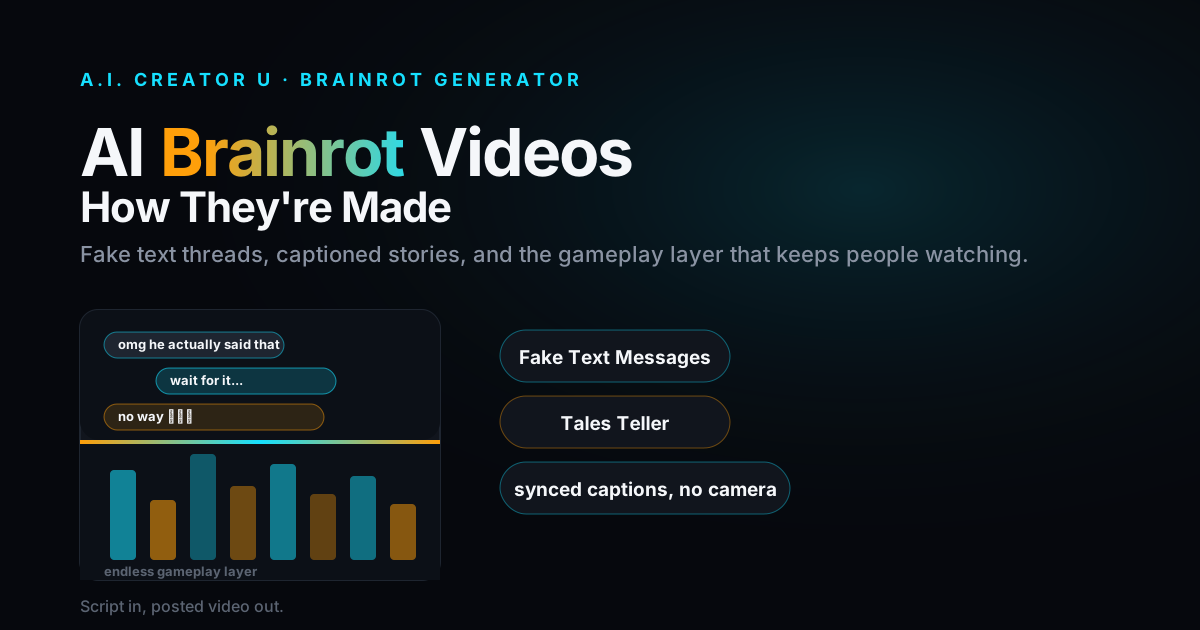
A brainrot video is a split-screen short: AI-narrated text on top (a fake text thread, a Reddit-style story, a "would you rather"), hypnotic gameplay footage (Subway Surfers, Minecraft parkour) running silent underneath. The gameplay keeps thumbs from scrolling, the text keeps eyes reading, and the whole thing gets made in minutes, not hours, once you're using the right generator instead of stitching it together by hand in CapCut.
Nobody sets out to make "quality" here. You're making something people can't look away from for 22 seconds, and that's a different skill than making something beautiful.
What a brainrot video actually is
The internet decided a few years back that "brainrot" was the word for content so aggressively stimulating it feels like it's melting your attention span. TikTok ran with it, Gen Alpha adopted it as a badge of honor, and by 2026 it's not an insult anymore, it's a genre with its own production formula.
The formula is boring once you see it: two layers, stacked.
Top layer: a hook and a payoff, delivered as text on screen (usually a fake iMessage or WhatsApp thread) or as narrated captions over a story. This is the actual content. It's a "my coworker did something insane" text exchange, a "tell me you're broke without telling me" thread, a two-minute Reddit AITA post read out loud with karaoke-style captions.
Bottom layer: gameplay that has nothing to do with the top layer. Subway Surfers is the default because it never ends and never gets boring to watch, but Minecraft parkour, Fruit Ninja, and ASMR soap-cutting all show up too. It's there for one reason: it's the leash that keeps a bored thumb from swiping away before the payoff lands.
That's it. No cinematography, no color grading, no b-roll. The whole appeal is the collision of two unrelated things fighting for attention at once, and somehow that fight is what makes people finish watching.
Why it works (and why creators keep making it)
Three reasons, and they're all boringly practical:
- It's fast to make. No filming, no location, no actors. Script plus two video layers plus captions equals a finished post.
- It's fast to consume. The format is built for the exact attention span TikTok's algorithm rewards. High completion rate, high rewatch rate, low effort to produce more.
- It scales. Once you have a working template, you can produce five or ten variations in the time it used to take to shoot one talking-head video. Volume is the whole game on short-form, and brainrot content is the cheapest volume there is.
That last point is the one that actually matters for anyone trying to grow an account. Algorithms reward consistency more than any single viral hit. A format you can churn out daily beats a format you can barely finish weekly, every time.
The two brainrot formats that actually convert
Not all brainrot is the split-screen gameplay format. In practice there are two distinct styles worth knowing, because they solve different problems.
Fake text message videos. These are conversation screenshots, animated to look like a real phone thread, often with a gameplay strip underneath for extra retention. They work because they read like gossip: the viewer feels like they're eavesdropping on a real conversation, even when the whole thing is scripted. This format is brutal for storytelling with a twist ending, revenge stories, "red flag" content, and comedy bits.
Captioned story videos. Instead of a fake conversation, you get a narrated story (AI voice reading a script) with word-by-word captions synced to the audio, sometimes over gameplay, sometimes over stock footage or a still image. This is the format behind most of the "Reddit story" and "scary story" channels that quietly rack up millions of views with zero face on camera.
Both formats share the same bones: a hook in the first three seconds, a script written for the ear (short sentences, no filler), and captions that do the heavy lifting since most people watch with the sound off.
How to actually make one, step by step
Here's the workflow, whether you're doing it manually or with a generator that automates the boring parts.
- Write the script first. Before touching any tool, write the hook and the punchline. If the first line doesn't create a question the viewer needs answered ("she found the texts three days before the wedding"), the gameplay footage isn't going to save it.
- Pick your format. Fake text thread for conversational or gossip-style content. Narrated story for anything longer or more atmospheric.
- Generate the narration. AI voice cloning and text-to-speech tools turn your script into audio in seconds, and you can pick a voice that actually fits the tone instead of using whatever came free with your last editing app.
- Layer in gameplay or background footage. This is what makes it a brainrot video and not just a story video. Subway Surfers footage is the safest default because viewers already associate it with "content I can't stop watching."
- Sync captions to the audio. Word-level, high-contrast, centered. This is non-negotiable; captions are doing most of the retention work here, not the voice.
- Export vertical, under 60 seconds, and post it everywhere. TikTok, Reels, and Shorts all reward the same format, so one script becomes three posts.
Doing all six of those by hand in a general editor takes real time: recording or sourcing narration, finding gameplay clips, timing captions manually, exporting for three aspect ratios. A.I. Creator U's Brainrot Generator collapses steps 3 through 6 into one pass. The Fake Text Messages tool builds the animated conversation with a gameplay strip underneath directly from a script, and Tales Teller turns a written story into a fully captioned, narrated video with the captions synced automatically to the AI voice track. You write the words; the tool handles the timing.
Fake text messages vs. captioned stories: which one to use
| Fake Text Messages | Tales Teller (captioned stories) | |
|---|---|---|
| Best for | Gossip, drama, "you won't believe what she said" | Reddit-style stories, scary stories, longer narratives |
| Format | Animated conversation thread + gameplay strip | Narrated voice-over + word-synced captions |
| Typical length | 20 to 45 seconds | 45 to 90 seconds |
| Script style | Back-and-forth dialogue with a twist | Linear narration with a hook and payoff |
| Why it retains viewers | Feels like real, overheard conversation | Voice + captions do the work; no gameplay required |
If you're not sure which to start with, start with fake text messages. The format is shorter, the script is easier to write (dialogue is more forgiving than narration), and the twist-ending structure is the most proven hook pattern in the genre.
The part nobody talks about: burnout and diminishing returns
Here's an honest opinion: most creators who try brainrot content quit within two weeks, not because it doesn't work, but because they treat it like a one-off instead of a pipeline. One video rarely goes anywhere. Ten videos with the same hook structure, posted daily, is what actually moves an account, and grinding out ten manually-edited videos a week burns people out fast.
That's the real argument for using a generator instead of manual editing: not that it's "easier," but that it's the only way the math works. If a video takes forty minutes to make by hand, you'll post three or four a week and plateau. If it takes five minutes because the narration, gameplay layer, and captions all get handled in one tool, you can post daily and actually give the algorithm the consistency it's rewarding.
Where this fits with faceless content in general
Brainrot videos are really just the fastest, lowest-effort branch of faceless content, the same tree that includes narrated Reddit-story channels, AI-voiced explainer accounts, and talking-head-free niche pages. If you're building toward something bigger than a single viral clip, it's worth reading how the format fits into a full faceless content strategy and how creators are building entire faceless YouTube channels around exactly this kind of content, brainrot included as one format in a rotation rather than the whole plan.
The voice-over is the other half of the equation that's easy to underrate. A flat, robotic narration kills a story video faster than bad captions do. If you haven't compared your options there, it's worth a quick read on adding AI voiceover to your videos before you lock in a single voice for every post.
Try it
Write a script, pick a format, and let the generator handle the timing. Head to the Brainrot Generator and run your first fake text thread or story video through Fake Text Messages or Tales Teller. You'll have something postable in the time it took to read this article.
FAQ
Is "brainrot" content actually bad for viewers? It's not built for depth, and nobody's pretending otherwise. It's a short-form entertainment format, not educational content, and treating it as anything else is where the genuine criticism of the trend comes from. As a creator, that's exactly why it works: it's honest about what it is.
What gameplay footage should I use for the background layer? Subway Surfers is the default because it's the format most viewers already associate with this genre, but Minecraft parkour and other endless, low-stakes gameplay work too. The requirement is constant, low-effort motion, nothing that demands the viewer's attention away from the top layer.
Do I need to film anything to make brainrot videos? No. That's the entire appeal. Script, AI narration, gameplay or story footage, and synced captions are enough. No camera, no face, no location.
How long should a brainrot video be? Fake text message videos usually run 20 to 45 seconds. Captioned story videos can stretch to 60 to 90 seconds if the story earns it. Longer than that and you're fighting the format's own strengths.
Can I turn one script into multiple videos? Yes, and you should. A strong fake-text script can often be re-shot as a captioned story with a different voice, and a longer story can be cut into a two- or three-part series. Reusing a proven hook structure across formats is how consistent posting actually gets manageable.