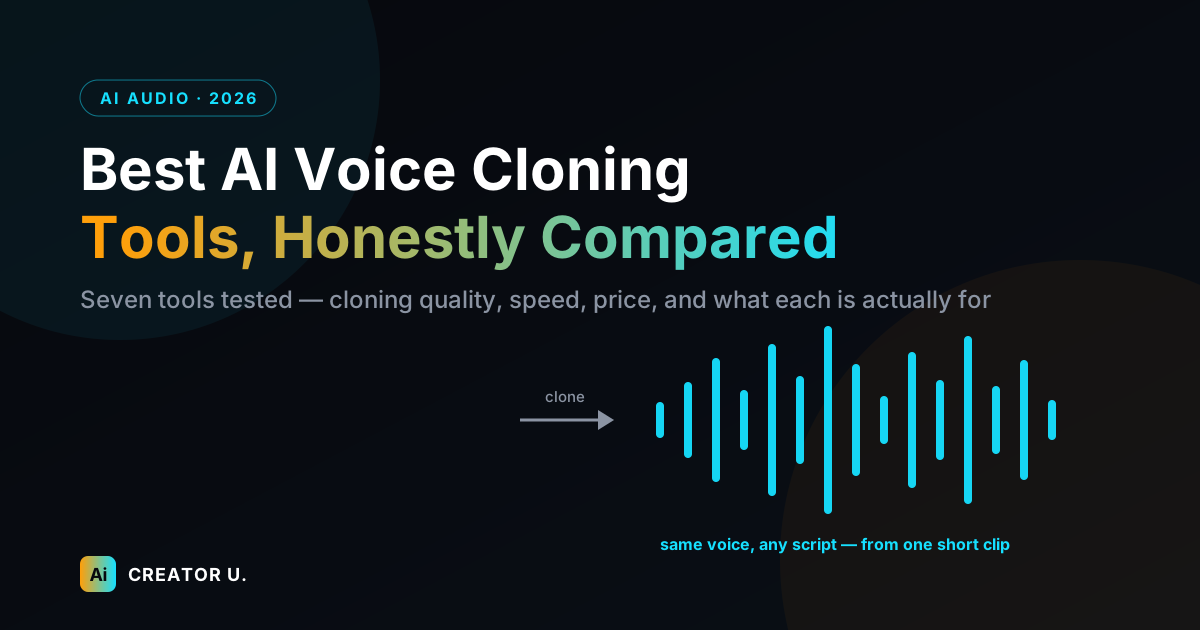
Every "best voice cloning tools" list crowns the same winner and moves on. That's useless, because the real answer depends on what you're making. Here are seven tools compared honestly — including where ours fits and where it doesn't.
The quick answer
The best AI voice cloning tool in 2026 depends on the job: ElevenLabs for long-form narration, Resemble AI for enterprise compliance, Fish Audio for emotional control on a budget, Descript for podcast editing, Chatterbox if you want free and open source — and Seed Audio inside A.I. Creator U. if you're a creator who wants the cloned voice, the music, and the video generated in one place.
New here? If you want the fundamentals first — what cloning actually does, how much audio it needs, what's legal — read our plain-English guide to AI voice cloning, then come back. This piece is purely about choosing a tool.
One honesty note before the list: yes, our own platform is on it. We've put it where we think it belongs, said what it's not good for, and given the other tools their real wins. You can judge whether we've been fair.
How do the top voice cloning tools compare?
| Tool | Best for | Audio needed | Pricing |
|---|---|---|---|
| A.I. Creator U. (Seed Audio) | Creators making videos | Short clip (zero-shot) | Credits — 15 free on signup |
| ElevenLabs | Long-form narration | 1–2 min instant; ~30+ min pro | Free tier; paid from ~$5/mo |
| Resemble AI | Enterprise / compliance | A few seconds | Custom / enterprise |
| PlayHT | Real-time voice apps | Under a minute (instant) | Paid plans |
| Fish Audio | Emotional control on a budget | Seconds | Low-cost paid plans |
| Descript | Podcast / video editing | Guided recording | Paid from ~$16/mo |
| Chatterbox (open source) | Self-hosters | ~5 seconds | Free (your own GPU) |
Pricing and audio requirements are as reported in July 2026 — these change fast, so confirm on each tool's pricing page before you commit.
Which tool is best for which job?
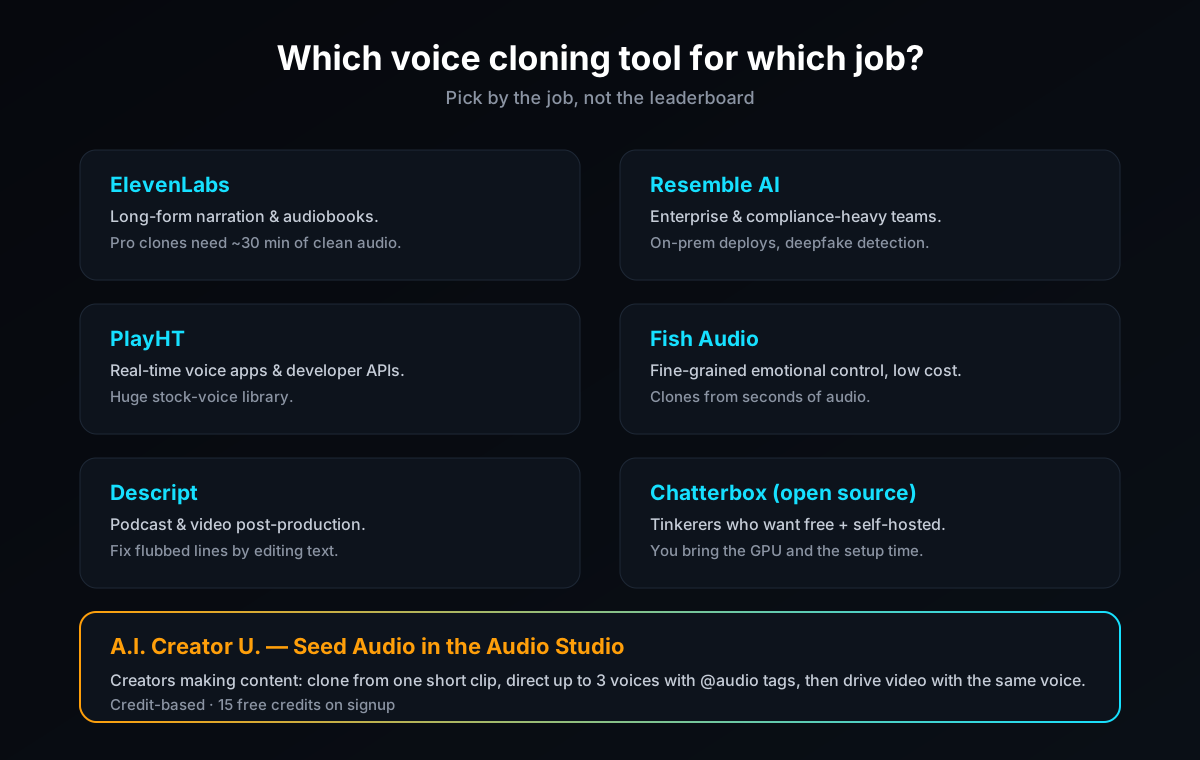
ElevenLabs — the narration benchmark
Still the name everyone measures against, and for long-form work it earns it. Its instant clone works from a minute or two of clean audio; the Professional Voice Clone tier reportedly wants 30+ minutes and pays you back with a replica stable enough for audiobooks and recurring series. Paid plans start around $5/month, and the free tier doesn't include a commercial license. The catch: it's a voice tool, full stop. Your music, sound design, and video all happen somewhere else.
Resemble AI — the enterprise pick
Clones from a few seconds of audio, but that's not why companies choose it. On-prem deployment, SOC 2, SSO, and a built-in deepfake detector are. If you're a compliance-heavy team putting a cloned voice into production at scale, this is the shortlist of one. For a solo creator, it's more machinery than you need.
PlayHT — real-time and API-first
The developer's option: a low-latency API that voice-agent builders like, plus one of the largest stock voice libraries anywhere. Cloning comes in instant and high-fidelity flavors. If you're building a voice app rather than voice content, start here.
Fish Audio — emotional control, small bill
The dark horse. Clones from seconds of audio and gives you unusually fine-grained emotional direction per line, at a fraction of ElevenLabs pricing. Quality reportedly rivals the big names. The trade-off is a smaller ecosystem and less polish around the edges.
Descript — cloning as an editing trick
Descript's clone exists to serve its editor: flub a line in your podcast, type the correction, and your cloned voice speaks the fix. Brilliant for post-production. But if you're generating content from scratch rather than repairing recordings, it's the wrong shape of tool.
Chatterbox — free, open source, DIY
The open-source model that's been beating commercial tools in reported blind listening tests, cloning from about five seconds of audio. It costs nothing — except your time, a GPU, and the willingness to be your own support team. Great for tinkerers; a distraction if you just want to ship content this week.
A.I. Creator U. (Seed Audio) — for creators who make videos
Here's our honest pitch. If your end product is a voice file, several tools above will serve you well. But if your end product is a video — ads, faceless content, character skits — cloning in a standalone voice tool means exporting, importing, and re-syncing across three apps. In our Audio Studio, Seed Audio clones a voice zero-shot from one short reference clip, lets you cast up to three cloned voices in a single generation with @audio1–@audio3 tags, and generates the music and sound effects in the same pass. Then that exact audio drives your Seedance 2.0 video as voice guidance. Pricing is credit-based with 15 free credits on signup, so you can test a clone before paying. What we don't claim: audiobook-length narration or an enterprise compliance stack — that's ElevenLabs and Resemble territory.
Try a clone in about two minutes. Open the Audio Studio, pick Seed Audio 1.0, attach a short reference clip as @audio1, and give it a line to read. Your 15 free signup credits cover the test.
How should you actually choose? A 4-question filter
- What's the end product? A voice file → ElevenLabs, Fish Audio, or PlayHT. A finished video → clone where the video gets made, so the audio never leaves the pipeline.
- How much reference audio do you have? A few seconds to a minute → any zero-shot tool (Seed Audio, Fish, Resemble, Chatterbox). Thirty-plus minutes of clean recordings and a need for maximum stability → ElevenLabs Professional.
- Who has to approve it? Just you → pick on quality and price. A legal or security team → Resemble's compliance stack will save you weeks of procurement pain.
- What's the real budget? Count the whole workflow, not the subscription. A "cheap" voice tool plus a separate music tool plus a video tool plus your export time often costs more than one platform that does the full pass.
And whatever you pick: only clone voices you have the rights to. Your own, a licensed one, or a voice actor who signed off. Every serious platform enforces this, and the ones that don't are the ones to avoid.
What can you do with a clone once you have one?
- Voiceovers at volume — one reference clip, unlimited takes — no re-recording every revision of an ad script.
- Multi-character content — cast two or three cloned voices in one Seed Audio generation and write the back-and-forth. Our Seed Audio guide covers the @audio tag trick in detail.
- Multilingual versions — speak your script in languages you don't — see our multilingual voice cloning breakdown for how cross-lingual cloning holds your voice across languages.
- Voice-driven video — feed the cloned audio into Seedance 2.0 as voice guidance so your on-screen character delivers the exact performance.
Deep dives on those workflows: How to Use Seed Audio for the multi-voice directing framework, and the best AI video tool for multilingual voice cloning for taking one voice across languages and into video.
The bottom line
Stop looking for the "best" voice cloning tool and start matching the tool to the output. Narration career? ElevenLabs. Enterprise deployment? Resemble. Hacking on a side project? Chatterbox. Making videos that need voices, music, and motion together? That's exactly what we built the Audio Studio for — and your first test costs nothing.